Sound testing
Part E Building Regulations sound insulation testing and value engineering for residential developments
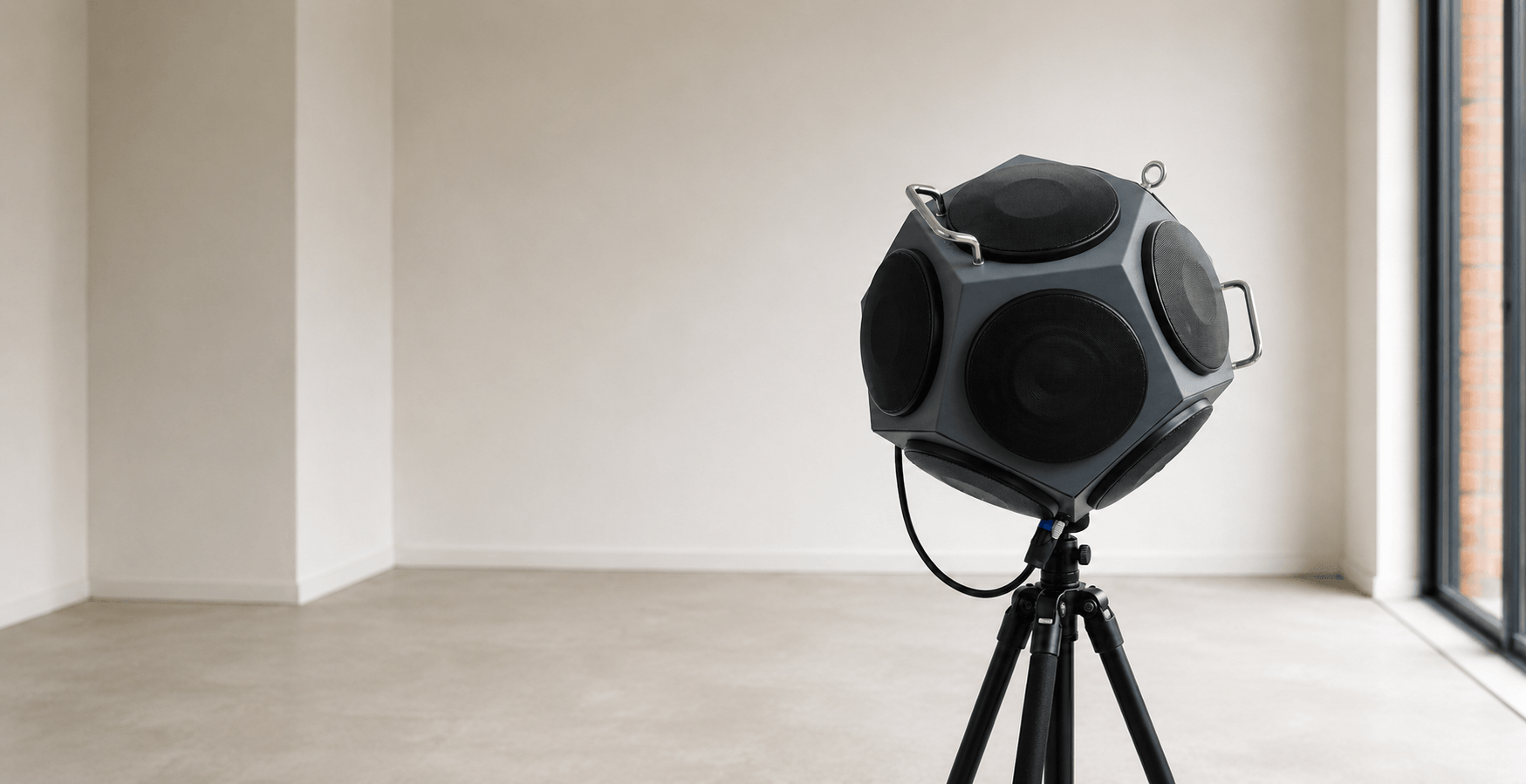
We'll tell you exactly where you stand before we leave site. If something hasn't performed we can provide further design advice.
Pre-completion sound insulation testing is a requirement of Building Regulations and forms part of Approved Document E. It applies to all residential developments, both new build and conversion.

SITMA authorised and registered tester.
Approved Document E performance standards
Approved Document E sets the minimum standards for sound insulation. These are expressed as DnT,w + Ctr for airborne sound passing through walls and floors, and L'nT,w for impact sound passing through floors.
New Build
Airborne sound insulation (walls and floors): minimum 45 dB DnT,w + Ctr
Impact sound insulation (floors): maximum 62 dB L'nT,w
Conversion (material change of use)
Airborne sound insulation: minimum 43 dB DnT,w + Ctr
Impact sound insulation: maximum 64 dB L'nT,w
Opal Acoustics provides Part E sound testing across Leeds, Yorkshire and the wider UK. We work with housebuilders of all sizes, from single-dwelling conversions to multi-phase residential developments.
Get a quote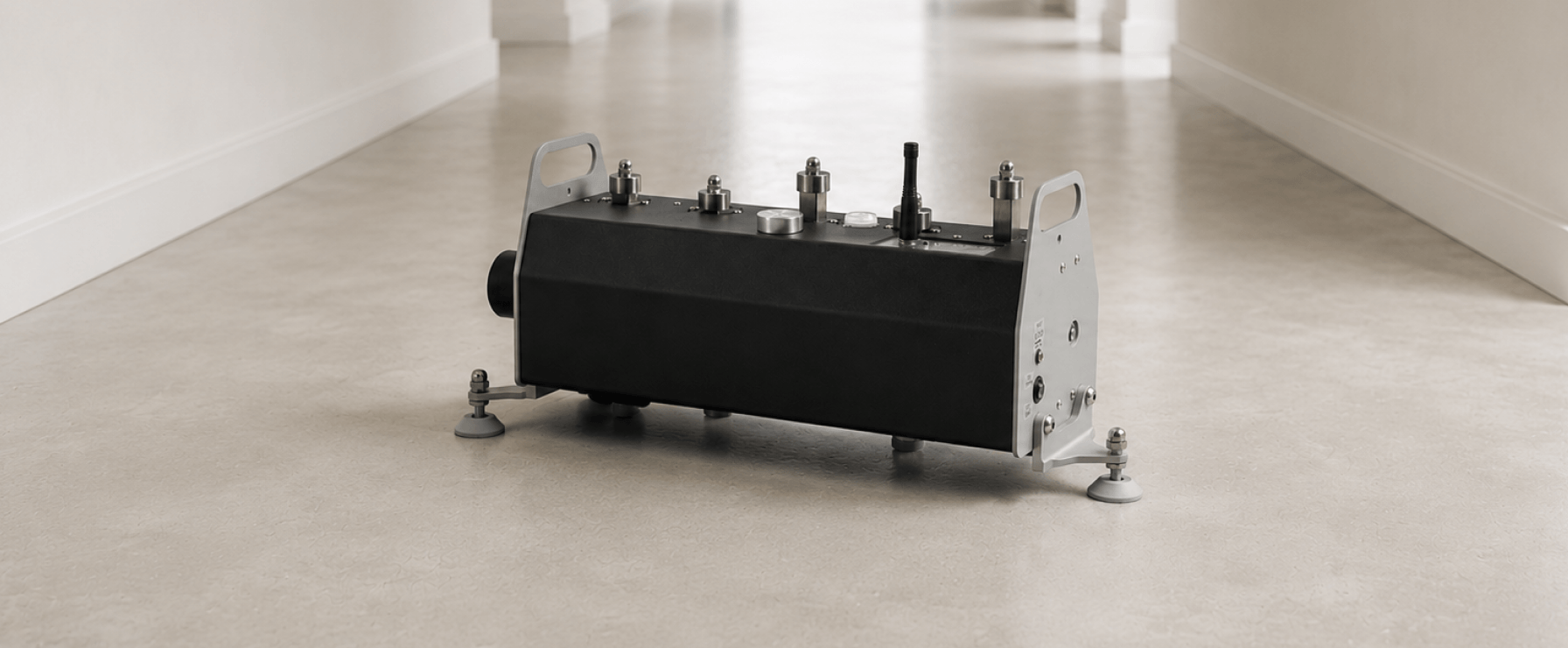
What to expect during a sound test
Before we arrive
We confirm the number of plots to be tested, the construction types and whether the building is in the correct condition: complete, sealed, services installed.
On arrival
Specialist sound level meters and loudspeaker / impact noise equipment are set up in the relevant rooms on both sides of each separating element: wall or floor.
The test itself
Airborne noise is generated in the source room using specialist loud speakers and measured in the receiving room. For impact sound, a tapping machine is used on the floor above.
Results on the day
We confirm pass or fail on site before leaving. You will not be kept waiting for an answer.
The test report
A full report with results in the format required by Building Control is issued within 48 hours as standard.
What happens if a plot fails?
A failed sound test does not have to mean a costly rebuild. In most cases, targeted works to address the specific cause will resolve the issue.
If a test result falls below the required performance values, we explain precisely which element failed, by how much, and why. In our experience, the cause almost always comes down to one of a small number of issues:
- Gaps or penetrations in the separating construction: service runs, socket boxes, or poorly sealed junctions
- A deviation from the specified construction detail during the build
- Flanking transmission, where sound is travelling through the structure rather than directly through the separating element
We provide practical remediation guidance in writing and can return to re-test once the works are complete.
Value engineering
Early sound testing can be arranged prior to a residential conversion to determine the existing acoustic performance of separating elements in order to minimise over-specifying upgrades, and therefore saving project costs.